

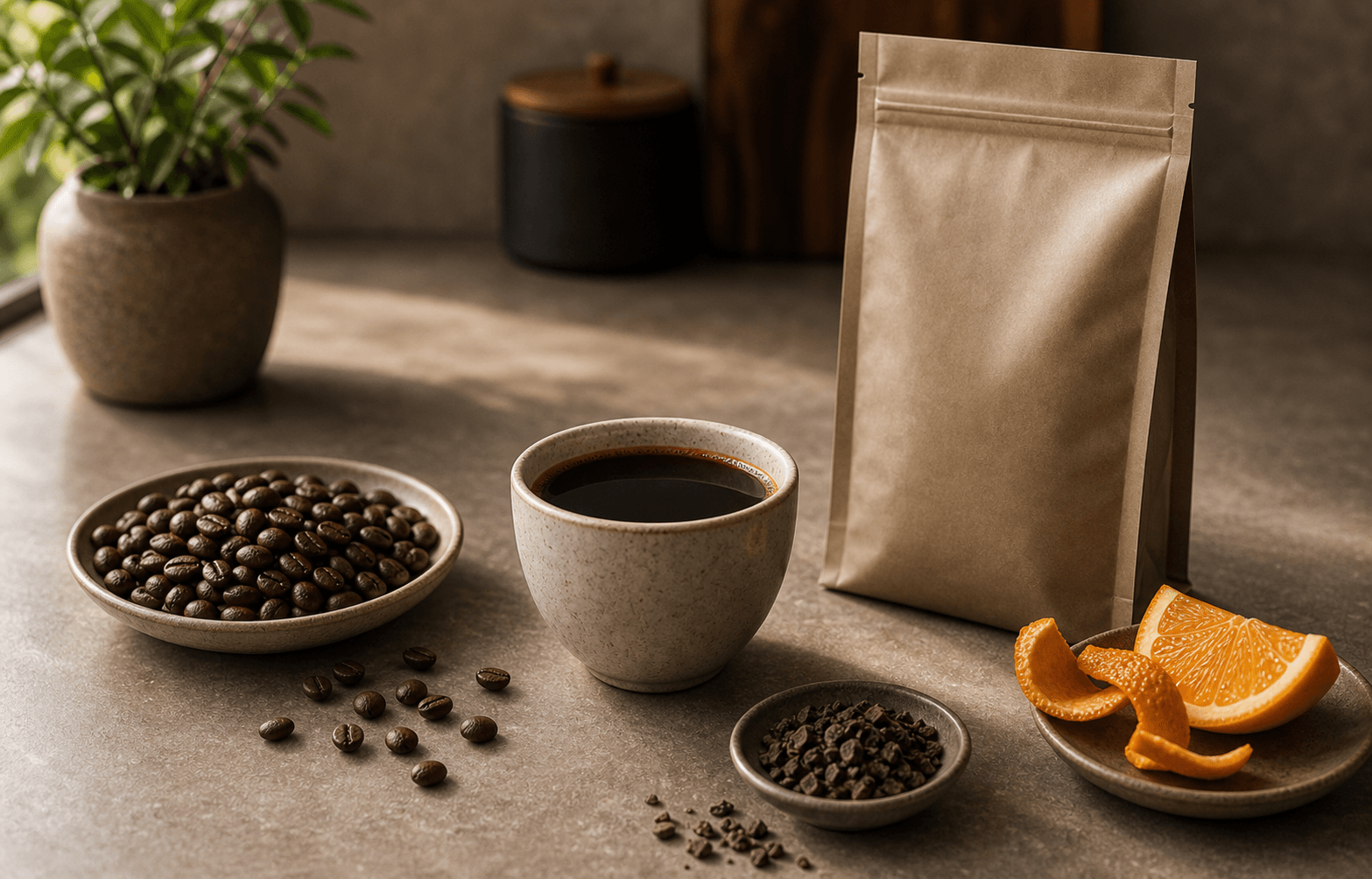
Out of Coffee does not add artificial flavouring. When we describe chocolate, nuts, florals, fruit, citrus, caramel or spice, we are describing tasting notes. Those notes come from the coffee itself and from the way it is grown, processed, roasted, matured and brewed.
This matters because we want the product to be clear: roasted coffee for people who want the crop, roast and brew to do the work, not a flavour system added afterwards.
No additives, no artificial flavouring
Artificial flavouring can make coffee taste like a product concept instead of an agricultural product. Out of Coffee is built around the opposite idea: the flavour should come from the bean, process, roast profile, post-roast maturation and brew method.
This is also a trust and health decision for us. We are not trying to make a medical claim about every approved flavouring substance. The point is simpler: artificial flavouring can involve added flavour compounds, carriers and supporting ingredients that do not need to be in a bag of roasted coffee. We care about our customers’ health and our own, so we keep the product clean: roasted coffee, left unflavoured, with the character of the bean exposed.
Tasting notes are comparisons, not ingredients
Coffee tasting notes are a way to describe sensory resemblance. A coffee can remind someone of dark chocolate without containing chocolate. It can suggest berries without containing berry syrup. It can show citrus, florals, caramel or spice without anything being added.
That is normal in speciality coffee because roasted coffee contains a complex matrix of aroma compounds. A natural Ethiopian coffee can suggest berries. A Brazil can lean chocolate and nuts. A washed East African coffee can show citrus or tea-like clarity. Those are sensory comparisons, not additives.
Coffee flavour is real chemistry
Roasting creates a complex aroma system through Maillard reactions, caramelisation, Strecker degradation and other heat-driven changes. Research often describes roasted coffee as containing hundreds of volatile compounds, with a smaller group carrying much of what people actually perceive.
That chemical complexity is why coffee can remind people of familiar foods without containing those foods. It is also why roast profile matters. A lighter, carefully developed roast may preserve more acidity and fruit. More development can move the cup toward chocolate, roasted nuts, body and bitterness.
Origin, process, roast and brew all change flavour
Coffee is an agricultural product. Variety, altitude, climate, soil, picking, fermentation and drying all affect the material that enters the roaster. Washed processing often supports clarity and structured acidity. Natural processing can produce heavier fruit and sweetness when it is clean and well managed. Fermentation and post-harvest choices can reshape aroma precursors before roasting even begins.
Roasting then changes the balance. One generic roast profile is not enough because different lots respond differently. The roast should serve the coffee and the intended brew use, not force every origin into the same flavour shape.
Even after the coffee is roasted, the brew method changes what you taste. Grind size, temperature, ratio, pressure, contact time and filtration all affect extraction. Filter can make clarity easier to read. Espresso concentrates flavour and can magnify imbalance. Automatic machines can smooth some coffees and hide detail in others.
How to read our product notes
Read tasting notes as a map of likely flavour direction. Chocolate and nuts usually signal comfort and body. Citrus and florals suggest clarity and brightness. Strawberry, apricot or tropical fruit often point to expressive process or origin character.
- No artificial flavouring is added.
- Notes are sensory descriptors, not ingredients.
- Natural notes come from origin, process, roast, maturation and brewing.
- Brew method can make notes clearer or more muted.
- Product pages should still be read with brew fit and storage in mind.
How this differs from a tasting-notes guide
This article explains the product promise: no artificial flavouring, no added flavour system, and no confusing ingredient language. Our separate tasting-notes guide explains how natural sensory notes form and how to use them when choosing coffee.
If you are deciding what to buy, read the flavour notes as direction, then check the coffee lane, brew fit and drinking-window guidance. That gives a more useful buying decision than chasing one note in isolation.
Read next
- Coffee tasting notes explained
- Specialist roast profiles by lot
- What third-party SCA grading means
- Shop true coffee character
Research Papers, Sources and further reading
This guide is written for customers, not as an academic paper. It is based on Out of Coffee research notes and the source areas below.
- Coffee flavour: an overview.
- Influence of provenance and roast degree on the composition of potent odorants in Arabica coffees.
- Effects of postharvest processing on aroma formation in roasted coffee – a review.
- Coffee extraction: A review of parameters and their influence on the physicochemical characteristics and flavour of coffee brews.
- FDA: Types of Food Ingredients.
- The Effect of Roast Development Time Modulations on the Sensory Profile and Chemical Composition of the Coffee Brew.