

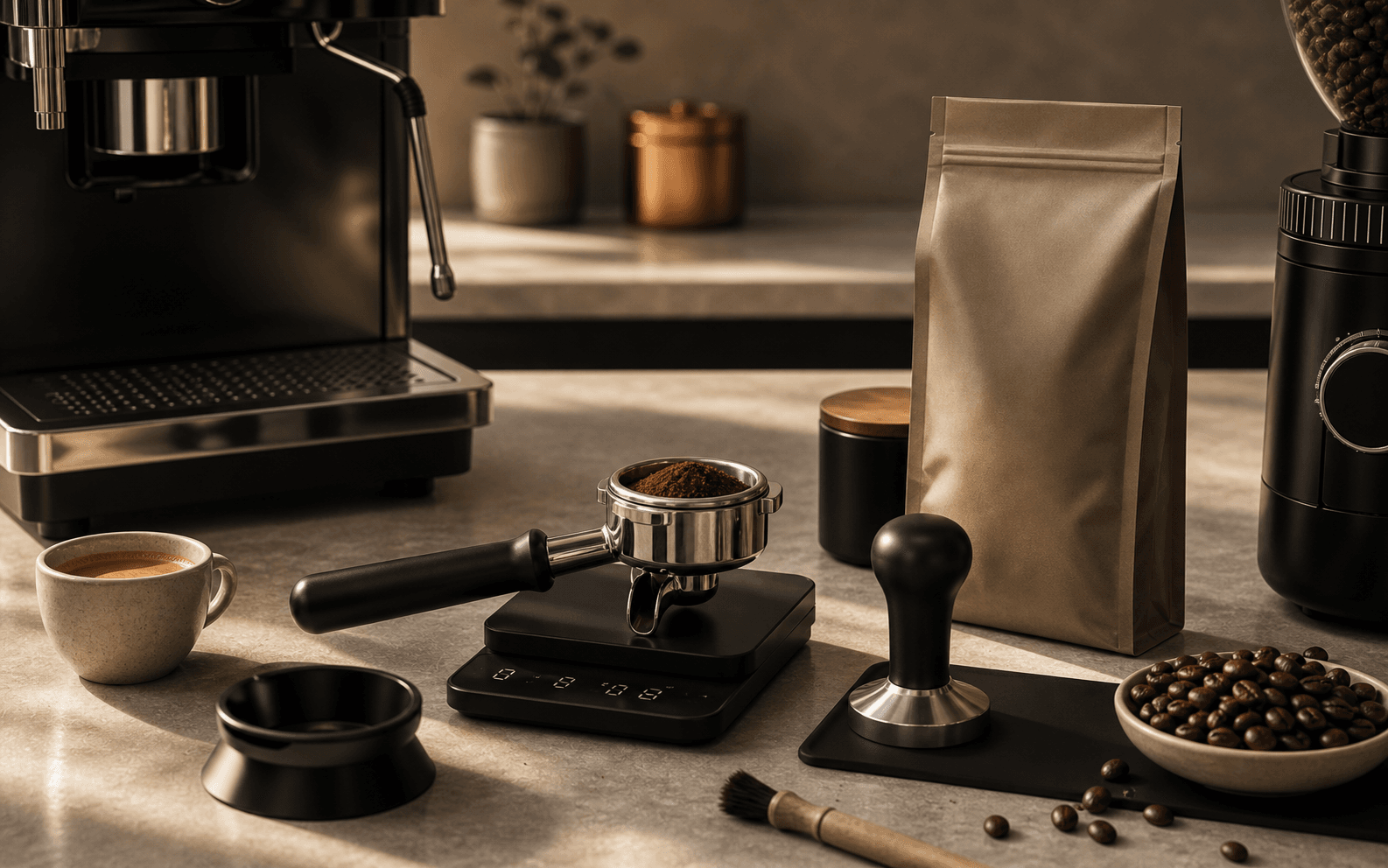
Espresso setups reward control. A capable grinder, repeatable puck prep and a machine that holds temperature and pressure can reveal sweetness, texture, acidity and aroma in a way many automatic machines cannot.
That control also makes espresso unforgiving. Small changes in grind, dose, distribution, tamp angle, basket fit, headspace, yield and time can move the same coffee from sweet to sour, hollow, bitter or muddy. Choosing coffee for espresso is therefore not only about flavour notes. It is about whether your setup can brew the coffee well.
Why espresso is sensitive
Espresso pushes hot water through a compacted coffee bed under pressure. The drink is small, concentrated and strongly affected by flow resistance. A small recipe mistake is magnified because there is less water and less dilution to hide it.
Dense, bright or very lightly roasted coffees can be beautiful in espresso, but they usually need stronger grinder control and a more careful dial-in. Rounded coffees with body and sweetness are more forgiving, especially for milk drinks or daily use.
Choose by control level
If you have an entry-level grinder or you are still learning, start with Easy Drinking coffees that show chocolate, nuts, caramel, cocoa, body and gentle fruit. They are easier to dial in and usually work better with milk.
If you have a capable grinder and enjoy dialing in, the Explorer range can be more rewarding. They may show citrus, florals, berries, stone fruit, tea-like clarity or more unusual process character. Expect them to demand more attention.
Resting matters for espresso
Very fresh coffee can make espresso difficult because gas release affects flow and extraction. The puck can behave unpredictably, the crema can look impressive while flavour stays tight, and the same grind setting can shift quickly from day to day.
Use roast date as context, but do not assume the freshest bag is the best espresso bag. Many coffees become easier to brew after they settle into a more stable drinking window. For espresso, that window can matter more than customers expect.
Basket fit, puck prep and headspace
Espresso quality is not only a bean choice. The physical fit of the puck in the basket also matters. Dose, distribution, tamp, basket depth, puck screen use and headspace all change how water meets the coffee bed.
If your shots vary wildly even with the same grind and yield, read our espresso headspace guide. A simple shallow-dent test can help you find a repeatable dose for your basket and machine before you blame the coffee.
Buying guidance
Choose espresso-fit coffees when you want concentrated sweetness, texture, milk compatibility or a focused manual routine. Choose filter-fit coffees when you want clarity without the pressure and puck-prep demands of espresso. Choose automatic-friendly coffees when convenience matters more than recipe control.
- For milk drinks, start with body, chocolate, nuts and sweetness.
- For straight espresso, decide whether you want comfort or clarity.
- Give coffee time to settle before judging it harshly.
- Use puck prep and headspace checks to reduce recipe noise.
- Match the coffee to your grinder and skill level, not only the score.
Straight espresso versus milk drinks
Straight espresso exposes the coffee directly. Acidity, bitterness, sweetness, texture and aroma all arrive in a small concentrated cup. If you drink espresso without milk, you can choose more expressive coffees, but you need the grinder and recipe discipline to support them.
Milk drinks need a different lens. Milk can make an acidic coffee feel smoother, but it can also hide delicate florals and clean fruit. For milk, body and sweetness matter more. Chocolate, nuts, caramel, cocoa, brown sugar and rounded fruit usually carry through better than fragile high-note aromatics.
How tasting notes translate into espresso
A tasting note does not behave the same in every brew method. Citrus in filter may taste fresh and structured. In espresso, the same citrus can become sharp if the shot is under-extracted or the coffee is too fresh. Chocolate in filter may feel gentle. In espresso, it can become deep, sweet and milk-friendly.
Use notes as direction, then decide whether your setup can support that direction. If a coffee is described as floral, bright and delicate, it may need more precise grinding, more careful puck prep and a stable recipe. If it is described as chocolatey, nutty and rounded, it is usually more forgiving.
Troubleshooting your first bag
If the shot tastes sour and thin, do not immediately blame the coffee. Check whether it is too fresh, whether the grind is too coarse, whether the dose fits the basket, and whether the yield is too short. If the shot tastes bitter, dry or hollow, check whether the grind is too fine, the yield too long, or the puck prep uneven.
Change one thing at a time. Keep dose and yield stable while adjusting grind. Once flow is sensible, adjust yield for taste. Then decide whether the coffee is the right fit for your setup.
When to choose a different coffee
If you want low-effort daily espresso, choose comfort first. If you want a tasting project, choose Explorer. If you drink mostly milk, choose enough body and sweetness to carry through. If your grinder is weak, avoid coffees that need very tight control.
The right espresso coffee is the one your setup can brew repeatedly, not the one that sounds most impressive on paper.
Read next
- Espresso headspace, puck prep and basket fit
- Roast date vs drinking window
- How brew method changes coffee flavour
- Shop espresso-fit coffees
Research Papers, Sources and further reading
This guide is written for customers and serious home espresso users, not as an academic paper. It is based on Out of Coffee testing and the source areas below.