

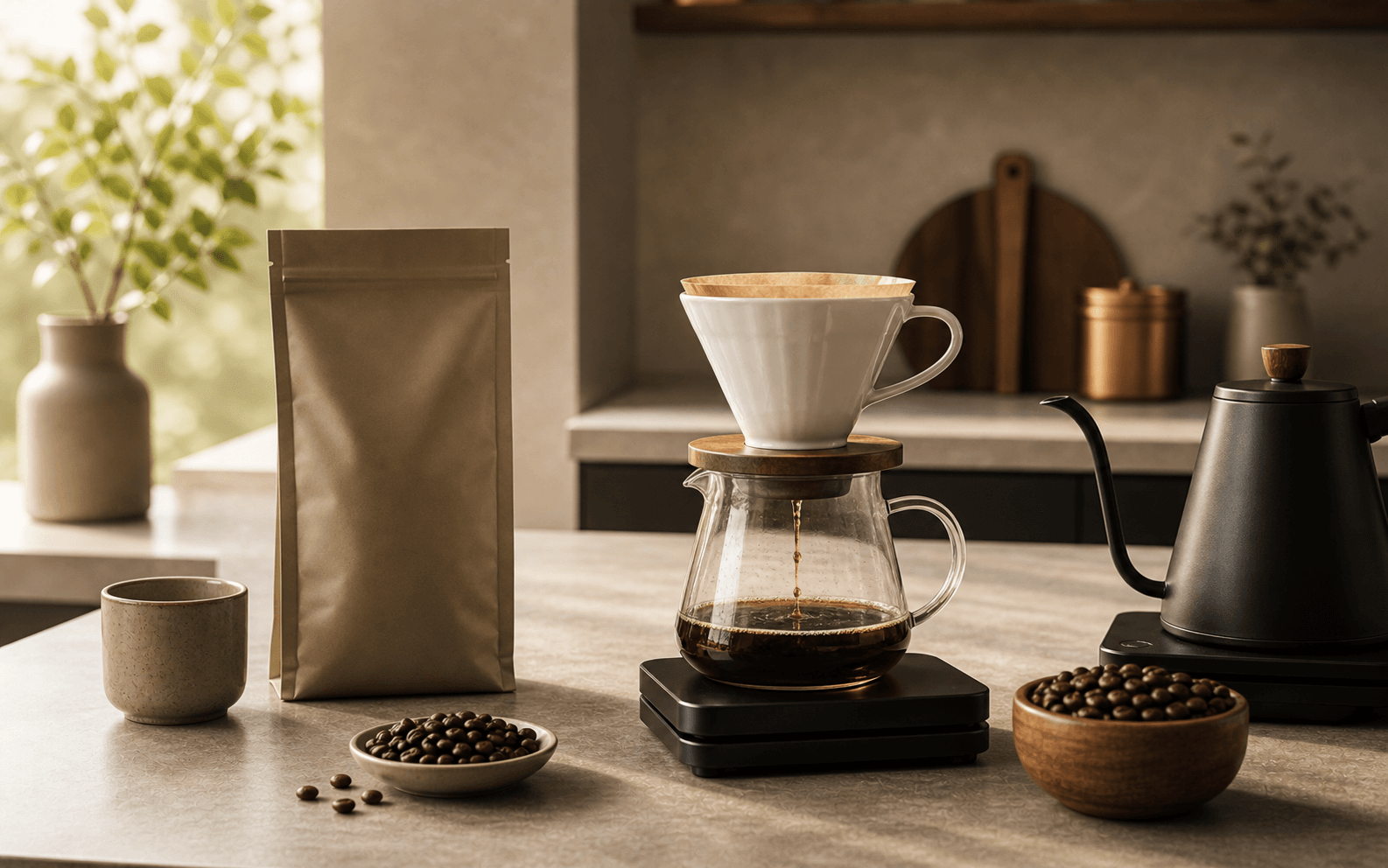
Filter brewing is often the clearest way to understand origin character. It is less concentrated than espresso, usually lower in pressure, and often uses paper filtration. That combination can make florals, citrus, tea-like notes, clean fruit and sweetness easier to read.
That does not make filter better than espresso. It makes it a different extraction system. If you want to taste detail without compressing everything into a tiny cup, filter brewing is a strong place to start.
Why filter shows clarity
Filter brewing usually uses more water, less pressure and a cleaner separation between liquid and grounds. Paper filtration can reduce heaviness and make aroma, acidity and sweetness feel more distinct.
This is why washed coffees, higher-acidity lots, floral notes, citrus, stone fruit and tea-like structures often work well in filter. The method gives those details room.
Which coffees to choose
Choose the Explorer range when you want clarity, origin detail and a more expressive cup. Washed East African coffees, clean fruit-forward lots and careful light-to-medium roast profiles often make sense here.
Choose Easy Drinking coffees for filter when you want a softer cup with chocolate, nuts, caramel or gentle fruit. Filter does not have to be sharp or fragile. It can also be comfortable, sweet and clean.
Recipe still matters
A good coffee can still brew badly. Grind size, water temperature, ratio, pouring pattern and contact time all change extraction. Under-extraction can taste thin, sour or grassy. Over-extraction can taste dry, bitter or muted.
Start with a stable recipe, then adjust one variable at a time. If the cup is sharp and thin, try a slightly finer grind, more contact time or a small ratio change. If it is harsh and drying, try coarser grind, lower temperature or less contact time.
Freshness window and storage
Filter drinkers should still pay attention to the drinking window. Very fresh coffee can bloom aggressively and taste tight. Poorly stored coffee can lose the aromatics that make filter worthwhile.
Store whole bean coffee sealed, cool and dry. Grind only what you need. If you buy a special lot and cannot finish it in time, freeze sealed portions rather than letting one opened bag decline slowly.
Buying guidance
- Choose filter when you want clarity, aroma and origin detail.
- Choose Explorer for florals, citrus, clean fruit and tea-like structure.
- Choose Easy Drinking for a softer filter cup with chocolate, nuts or caramel.
- Store carefully because filter exposes stale aromatics quickly.
- Read tasting notes as direction, then use recipe control to find balance.
Washed, natural and process-heavy coffees in filter
Washed coffees often suit filter brewing because they can show clarity, structure and clean acidity. Natural coffees can also be excellent, especially when the fruit is clean and the roast keeps sweetness intact. More process-heavy coffees can be exciting, but they can dominate the cup if the fermentation character is too strong for your preference.
If you are new to filter, start with a coffee whose notes sound clear rather than chaotic. Citrus, tea-like, florals, stone fruit, honey, caramel or clean berry notes are often easier to understand than very heavy fermented fruit as a first bag.
Equipment and paper choice matter
Filter brewing is not only the coffee. The brewer, paper, grinder, water and pouring style all change the result. A flat-bottom brewer can taste different from a cone brewer. A fast paper can reduce contact time. A grinder with too many fines can make the cup muddy or bitter even when the coffee is good.
Use a consistent recipe before judging the coffee. Rinse the paper, use clean water, weigh your dose and water, and avoid changing grind, ratio and pouring all at once.
Common filter buying mistakes
Do not buy only by the most dramatic tasting note. A coffee that says tropical fruit, wine or fermentation may be exciting, but it may not be the best daily filter if you want clean sweetness. Do not ignore roast date and storage either. Filter can expose stale aromatics quickly because there is less roast intensity or milk to hide the decline.
Also avoid assuming that filter always means light, bright and sharp. A well-chosen filter coffee can be sweet, rounded and calm. The goal is clarity, not punishment.
A simple starting point
Choose Explorer when you want detail. Choose Easy Drinking when you want a calmer cup. Choose washed or clean-process coffees when you want clarity. Choose natural or process-forward coffees when you want more fruit and are comfortable with a louder cup.
Then brew consistently and let the coffee tell you whether the buying decision was right.
Read next
- Coffee tasting notes explained
- How brew method changes coffee flavour
- How to store coffee after opening
- Shop filter-friendly coffees
Research Papers, Sources and further reading
This guide is written for customers, not as an academic paper. It is based on Out of Coffee research notes and the source areas below.