

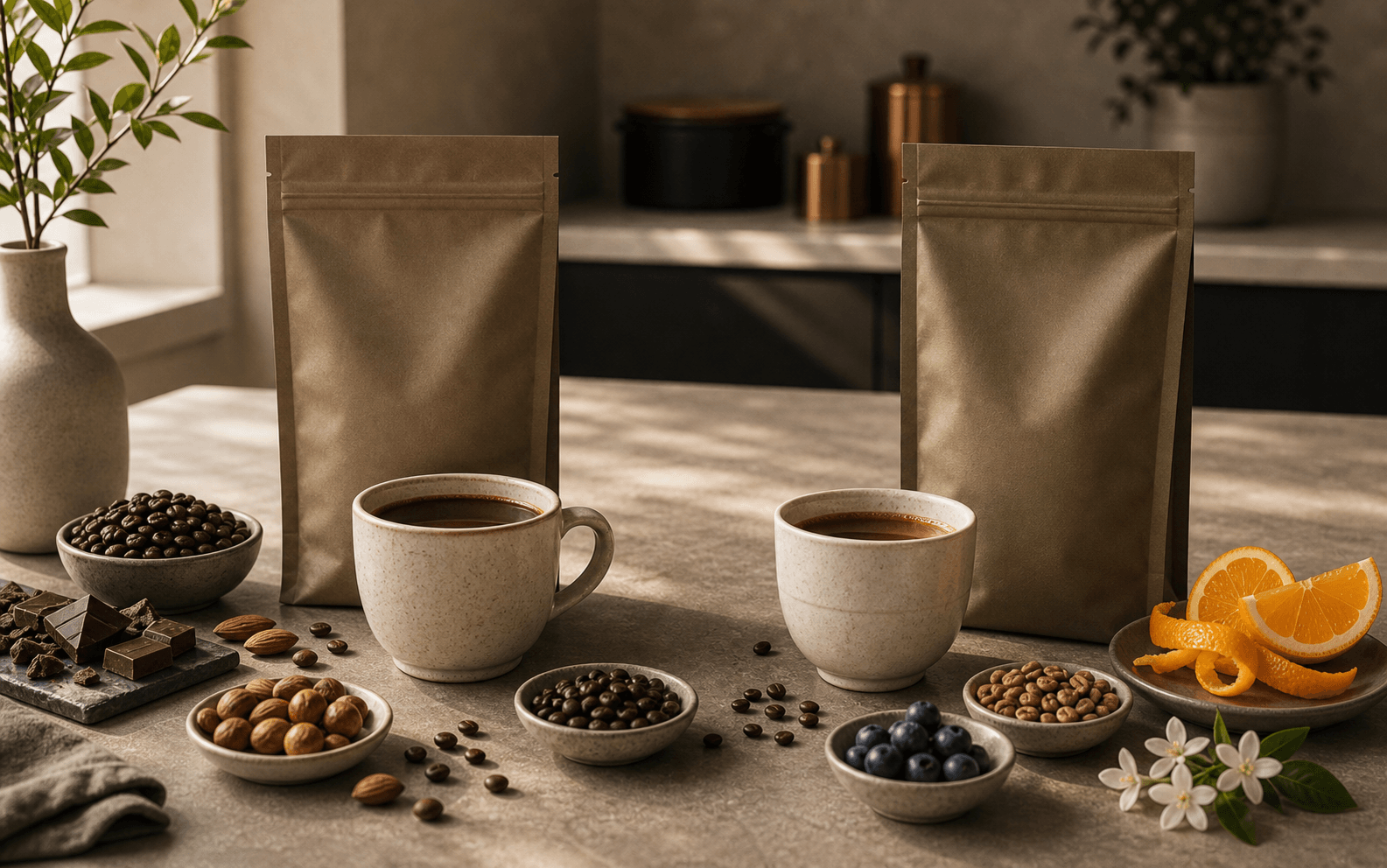
Easy Drinking and Explorer are not quality tiers. They are buying lanes.
The point is to help you choose a coffee that fits your taste, brew method, machine and daily routine before you get lost in origin vocabulary or score numbers.
Easy Drinking means comfortable and forgiving
Easy Drinking coffees are built around comfort: rounded body, sweetness, chocolate, nuts, caramel, cocoa, gentle fruit, lower sharpness and broad brew compatibility.
They are usually safer for milk drinks, automatic machines, office setups and customers who want a dependable daily coffee. A good Easy Drinking coffee can still be speciality grade, carefully roasted and interesting. It is simply designed to be more forgiving and familiar.
Explorer means more expressive
Explorer coffees lean into distinctiveness. They may show more acidity, fruit, florals, fermentation character, clarity, unusual process expression or more origin-specific structure.
That can be exciting, but it can also be less forgiving. Explorer does not mean better for every customer. It means more expressive and more context-dependent. These coffees often reward filter brewing, careful espresso setups and drinkers who enjoy discovery.
Score is not the same as fit
A high score can point to quality and complexity, but it does not know your grinder, water, milk use, palate or machine. A high-scoring bright coffee can be a poor match for an automatic machine. A comfortable chocolate-and-nut coffee can be exactly right for daily milk drinks.
Use score as one piece of evidence. Then use the lane to decide whether the coffee fits how you actually drink.
How to choose quickly
Choose Easy Drinking when you want comfort, daily consistency, milk compatibility or a safer automatic-machine option. Choose Explorer when you want flavour discovery and have a brew method that can show detail.
If you are buying for a household, office or customer-facing setting, Easy Drinking is usually the safer first bag. If you are buying for a focused brew session, filter tasting or manual espresso practice, Explorer can be the better route.
- Easy Drinking: comfort, body, forgiving balance.
- Explorer: clarity, acidity, fruit, florals or process character.
- Decaf: flavour without caffeine, still no artificial flavouring.
- When unsure, start Easy Drinking and move outward.
How the lanes map to brew methods
Easy Drinking is usually the better first choice for automatic machines, moka pots, milk drinks and shared home or office setups. These methods and contexts reward balance, body and forgiveness. A coffee that tastes comfortable across a few recipes has more value there than a coffee that only shines under one narrow set of conditions.
Explorer is usually the better choice for filter brewing, careful manual espresso and customers who actively want to taste origin or process character. It can be excellent in milk or automatic machines, but it is not the safest starting point because the more delicate or unusual parts of the coffee can be hidden, sharpened or distorted by the wrong method.
Examples of a good fit
If you drink flat whites every morning, an Easy Drinking coffee with chocolate, nuts and a rounded finish is usually a better fit than a very bright floral lot. If you brew V60 or another paper-filter method on weekends, an Explorer coffee with citrus, florals or clean fruit can be more rewarding because the method gives those notes room.
If you are buying for someone else, start with Easy Drinking unless you know they enjoy acidity, fruit and origin exploration. If they already talk about washed Ethiopia, anaerobic process, filter clarity or cup scores, Explorer is probably worth considering.
What to do when you are unsure
Use the lane as the first filter, then check brew fit and tasting notes. The lane tells you the general personality. Brew fit tells you whether your equipment can show it properly. Tasting notes tell you the flavour direction. Drinking-window guidance tells you when to expect the coffee to behave well.
A good buying decision uses all four. That is why Out of Coffee avoids treating any single number, note or label as the whole story.
Read next
- Choosing coffee for automatic machines
- Choosing coffee for filter brewing
- How brew method changes coffee flavour
- What third-party SCA grading means
Research Papers, Sources and further reading
This guide is written for customers, not as an academic paper. It is based on Out of Coffee research notes and the source areas below.